The Case for a Third Place
I have a sneaking suspicion I'm not the only person who has started to get a little tired of being on a screen all the time. Between scrolling, texting, working, and the seemingly endless number of things our phones can now do for us, it's pretty easy to go through an entire day without really having to interact with the world around us. And yet, despite how convenient all of this is, I find myself increasingly drawn to things that feel a little slower and more tangible. Reading an actual book, taking a walk without my phone, or sitting in a coffee shop for no particular reason all seem oddly more appealing these days. Truth be told, I am a victim of the “analog movement”.
Of course, technology has made our lives easier in countless ways, and I'm certainly not suggesting we all throw our phones into Lake Michigan and go live off the grid. But there is something to be said for what we might have lost as our lives have become increasingly digital.
One of those things is simply being around other people.
It’s hard not to notice that, while we have more ways than ever to communicate with one another, so much of that communication now happens from behind a screen. A recent essay in Time Magazine explored the relationship between technology, isolation, and the decline of real-life social connections, particularly in the informal gathering spaces where people once regularly interacted with one another.

These spaces have come to be known as “third places.”
Sociologist Ray Oldenburg coined the term in the 1980's to describe places outside of our homes (the “first place”) and our workplaces (the “second place”) where people can gather and interact with their communities. Libraries, parks, bookstores, bars, and, of course, coffee shops can all serve as third places.
Oldenburg described them as “anchors of community life”—places where people can connect, exchange ideas, and develop a sense of belonging without having to make a reservation three weeks in advance.
Think about your favorite coffee shop or neighborhood bookstore. You don't usually go because you expect to meet someone you know. You might just want to grab a latte or the latest bestseller. But while you're there, you might run into a neighbor, recognize a familiar face, or strike up a conversation with the person at the register. Or maybe you don't talk to anyone at all. You simply sit among other people for a while.
That kind of interaction can seem super small, but it actually matters much more than we realize.
So much of our social interaction has become intentional. We make plans with friends, send a text when we want to talk to someone, schedule an outing weeks in advance, or communicate through social media. Even our digital worlds are increasingly personalized around our own interests and preferences. The internet is very good at showing us more of what we already like and creating comfort.
Third places are different because we don't have quite as much control over who or what we encounter. We are ushered into unpredictable discomfort (and if we’re honest, it is the only way to grow).
You might sit next to someone from a completely different generation or background. You might see the same person several times before you ever actually speak to them. You might become a regular without really realizing it. Over time, these small, unplanned interactions (full of real-time charm and awkwardness) create a sense of familiarity, and familiarity is one of the things that makes a place start to feel like your place.
Because of all this, it would only seem fitting that coffee shops make such great third places.
Coffee gives us a reason to gather, but it doesn't really dictate what happens once we're there. You can meet a friend, read a book, or simply sit and enjoy your coffee while pretending you're going to be productive.
In my experience behind the bar, conversation often strikes simply because someone happens to be standing next to someone else at the bar. I’ll see customers come in to work alone but end up chatting with someone they recognize. There are friends who meet weekly. Dedicated Regulars whose orders are already made before they've finished saying hello.
These interactions are pretty mundane. But that’s what I like about them.
Community doesn't always come from large events or organized gatherings (even if that’s how we imagine it). Much of it comes from repeated, ordinary interactions with the people who happen to live around us. The unfortunate reality is that these kinds of places seem to be getting harder to find, thus a drastic drop in happenstance meetings.
Longer work hours, digital interaction, and the closure of local businesses have all changed the way we spend our time. Many of the places that once gave people a reason to gather are disappearing or becoming less central to our everyday lives. When we lose a local coffee shop, bookstore, library, or other gathering space, we lose more than another place to spend money. We lose one of the places where those small, unplanned interactions can happen. The ones that don't necessarily turn into friendships or memorable stories, but slowly make us feel more connected to the people around us.
That is what makes the idea of the third place so interesting to me. And frankly, why I feel so strongly that coffee shops are one of the most obvious third places of our time. It's such an honest place where we can exist alongside one another, encounter people outside of our usual circles, and slowly become familiar with the people and places around us (and even take social risks!). All while enjoying our favorite seasonal drink and taking an aesthetic picture of our latte art.
I’d argue that's something worth holding onto. In a world where we can do almost everything without leaving the house, there is still something to be said for having somewhere to go simply because other people are there.
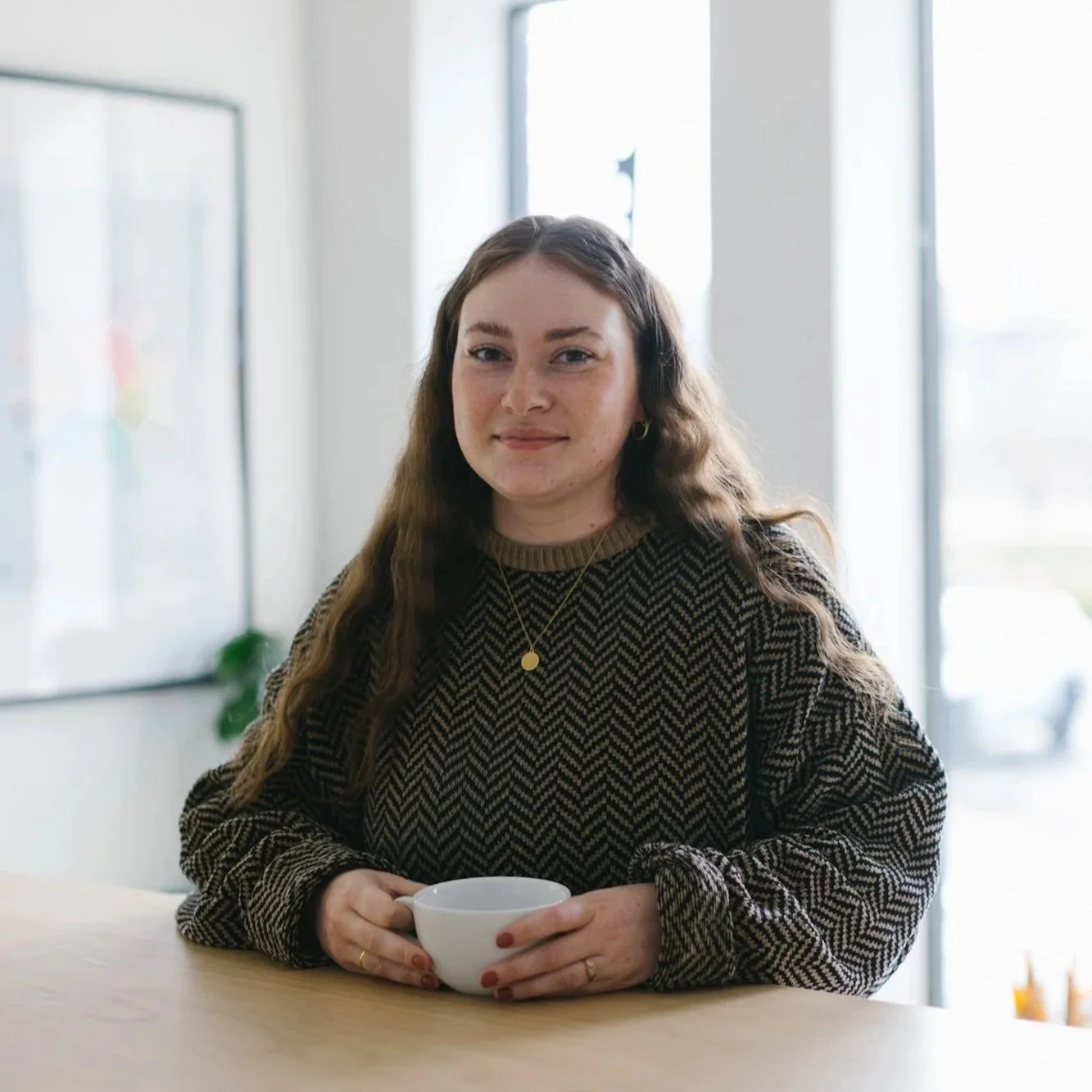
Marissa Cummings
On staff at our Libertyville café, Marissa loves befriending customers and making the perfect cup of coffee. When not behind the bar, she is usually exploring new coffee shops, curled up with a good mystery book and a warm miel in hand.