
Coffee Co-Fermentation Explained
If you’ve tried a cup of our new summer blend, Big Juice, you may be wondering: What’s up with this new fruit-forward brew?
What makes this blend so unique is that it contains a co-fermented coffee. Co-fermentation is an additional step that some coffee producers incorporate during processing, allowing them to influence and enhance a coffee’s flavor profile in exciting new ways.
To understand what makes co-fermentation special, it helps to first understand how coffee is typically processed after harvest. While processing is often overlooked, it plays a major role in shaping the flavors that ultimately end up in your cup.
Processing Overview
The three primary processing methods used in coffee are washed, natural, and honey processing. Although each method is different, they all share the same goal: extracting the coffee bean from the bright red fruit in which it grows.
Coffee cherries contain a sticky layer called mucilage between the fruit and the seed (the “bean”). The way producers remove this layer has a profound impact on flavor.
In washed processing, the fruit is removed shortly after harvest and the beans are soaked in water tanks, where fermentation helps break down the remaining mucilage. This method often produces coffees with exceptional clarity and brightness.
In natural processing, whole coffee cherries are spread out to dry in the sun for several weeks. As the fruit dries, naturally occurring yeasts and bacteria ferment the sugars within the cherry, often resulting in sweeter, fruitier flavors.
Honey processing falls somewhere in between. Some of the fruit is removed, but a portion of the sticky mucilage is left on the bean as it dries, creating a balance between the clean profile of washed coffees and the fruit-forward character of naturals.
Co-Fermentation Explained
Unlike traditional processing methods, co-fermentation intentionally introduces additional ingredients during fermentation. Producers may use fruits, herbs, spices, or carefully selected yeast strains, all of which interact with the natural sugars and microorganisms already present on the coffee cherries.
The goal isn’t simply to “flavor” the coffee after processing. Rather, co-fermentation influences the fermentation itself, allowing new aromatic compounds and flavors to develop naturally within the bean.
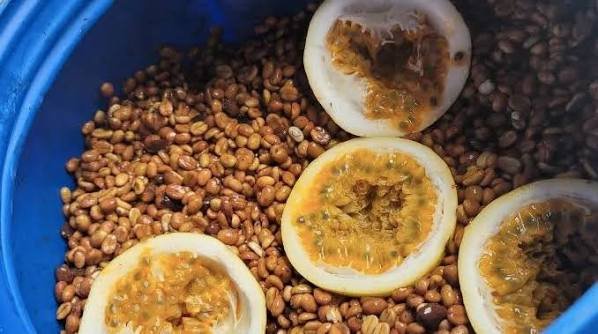
In Big Juice, our summer blend of coffees from Colombia and Ethiopia, the Colombian component underwent a controlled co-fermentation process using real passionfruit. After harvest, the coffee cherries were fermented alongside fresh passionfruit pulp and selected yeast strains in sealed tanks. As the natural sugars from both the coffee and the fruit broke down, the fermentation amplified the coffee’s naturally bright, tropical character.
Once the desired level of fermentation was reached, the coffee was washed, dried, and prepared for roasting. The result is a coffee that showcases just how dramatically processing methods can influence flavor.
Combined with the naturally processed Ethiopian coffee in Big Juice, the blend celebrates everything we love about summer: bold fruit, refreshing sweetness, and a coffee that’s as fun to drink as it is to learn about.
Whether you’re already a fan of fruit-forward coffees or you’re trying co-fermentation for the first time, these unique coffees are a delicious reminder that every step of coffee’s journey shapes what ultimately ends up in your cup.
We hope you enjoy Big Juice as much as we do.

Maya Johnson
Meet Maya, a Wisconsin native who studied biochemistry/molecular biology and neuroscience at Lake Forest College. She is a friendly face behind the bar at Highwood, known for striking up conversations about truly anything. Outside of pulling espresso shots, Maya is currently in the process of applying to Physician Assistant schools.